Featured
How to Cook with Himalayan Pink Salt: Grain Size and Storage
A practical kitchen guide to choosing fine or coarse pink salt, seasoning everyday meals, measuring carefully and keeping your salt dry.
Himalayan Koh5 min read
Read Article
All Natural Himalayan salt for livestock and the kitchen

Research guides and educational articles on Himalayan pink salt: culinary techniques, pasture management, mineral science, and bulk storage protocols
A practical kitchen guide to choosing fine or coarse pink salt, seasoning everyday meals, measuring carefully and keeping your salt dry.

A practical evaluation of free-choice salt blocks versus granular loose salt for cattle, horses, and small ruminants—comparing intake regulation, pasture durability, and labor efficiency.

Understanding equine thermoregulation, sweat composition, and why plain sodium chloride is the indispensable trigger for the equine thirst response.

Quantitative sodium chloride requirements for beef and dairy cattle, seasonal grazing shifts, and how salt acts as a nutritional intake regulator across pasture herds.

Everything ranchers, equestrians, and wildlife managers need to know about unprocessed Himalayan rock salt licks: physical structure, rope mounts, and handling.
A practical sizing reference chart comparing 1–2 kg, 3–4 kg, 5–6 kg, and 20 kg blocks based on herd numbers, stocking density, and mounting options.
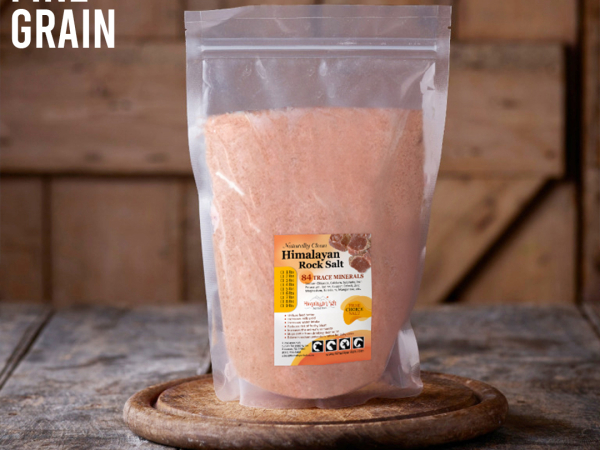
How to manage hygroscopic salt storage in humid warehouse, barn, and shipping environments—preventing caking, pallet collapse, and packaging degradation.
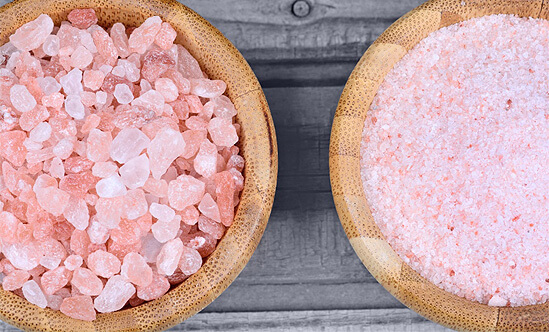
Choose culinary salt by its label and grain size, understand volume measurements, and distinguish food-grade salt from livestock products.

Step-by-step techniques for safely heating, searing, and freezing solid pink salt slabs—including crucial temperature graduation stages to prevent thermal shock fractures.
Proper maintenance rules for culinary salt slabs: why soap and dishwashers ruin the stone, damp-cloth cleaning, scrape techniques, and dry storage.
Field strategies to maximize the lifespan of outdoor salt blocks: managing rain erosion, ground contact barriers, predator security, and rotational positioning.

A chemical reality check on the popular "84 minerals" claim: spectroscopy findings, why the salt is pink (iron oxide), and factual nutritional boundaries.
A head-to-head comparison between mined Himalayan rock salt and refined vacuum-evaporated table salt—covering processing methods, additives, moisture, and culinary performance.